A decade ago, the question of whose brand appeared on a member’s screen barely mattered, because most members never saw a screen. They visited the facility, called the manager and received paper statements. Today, a growing number of members interact with their storage provider mainly through their phone. That screen has quietly become one of the most important parts of the relationship.
This raises a question many operators haven’t considered carefully. When your members open their collection, whose name do they see? Yours, or your software provider’s? The answer shapes who your members feel connected to, and over time, whose customers they really are.
The screen becomes the relationship
For many members, the facility is a place they visit a few times a year. The portal is somewhere they visit every week. They check what they own, see what is ready to drink, request a bottle and read their statement. Over time, that screen becomes their main experience of your business.
If that experience carries a third party’s brand, the member gradually associates the convenience and pleasure of it with that company rather than with you. They may start to think of your facility as simply the building where the software keeps their wine. That is a subtle shift, but it matters, because relationships and loyalty tend to follow the brand people interact with most.
What white-label actually means
A white-label portal is software built by one company but presented entirely under another’s brand. For a storage operator, that means members see your club’s name, your colors and your contact details. They don’t need to know or care what platform sits underneath, just as hotel guests rarely know which system runs the booking engine.
Done properly, white-label covers far more than a logo in one corner. It extends to the emails members receive, the name on the sign-in screen, the icon and name that appear if they save the portal to their home screen, and the way messages and replies flow back to your team. Every point where a member touches the service should feel like your business.
Why it matters for loyalty
Members stay with storage providers for many years when they feel a personal connection. A white-label portal reinforces that connection every time a member uses it. Each check of the collection, each request and each statement quietly reminds them that your business is looking after their wine.
It also protects you. If a member’s loyalty is attached to a software brand, they might follow that brand to another facility that uses the same platform, or simply feel less tied to you. When the relationship is clearly with your business, their loyalty stays where it belongs.
Consistency with your physical space
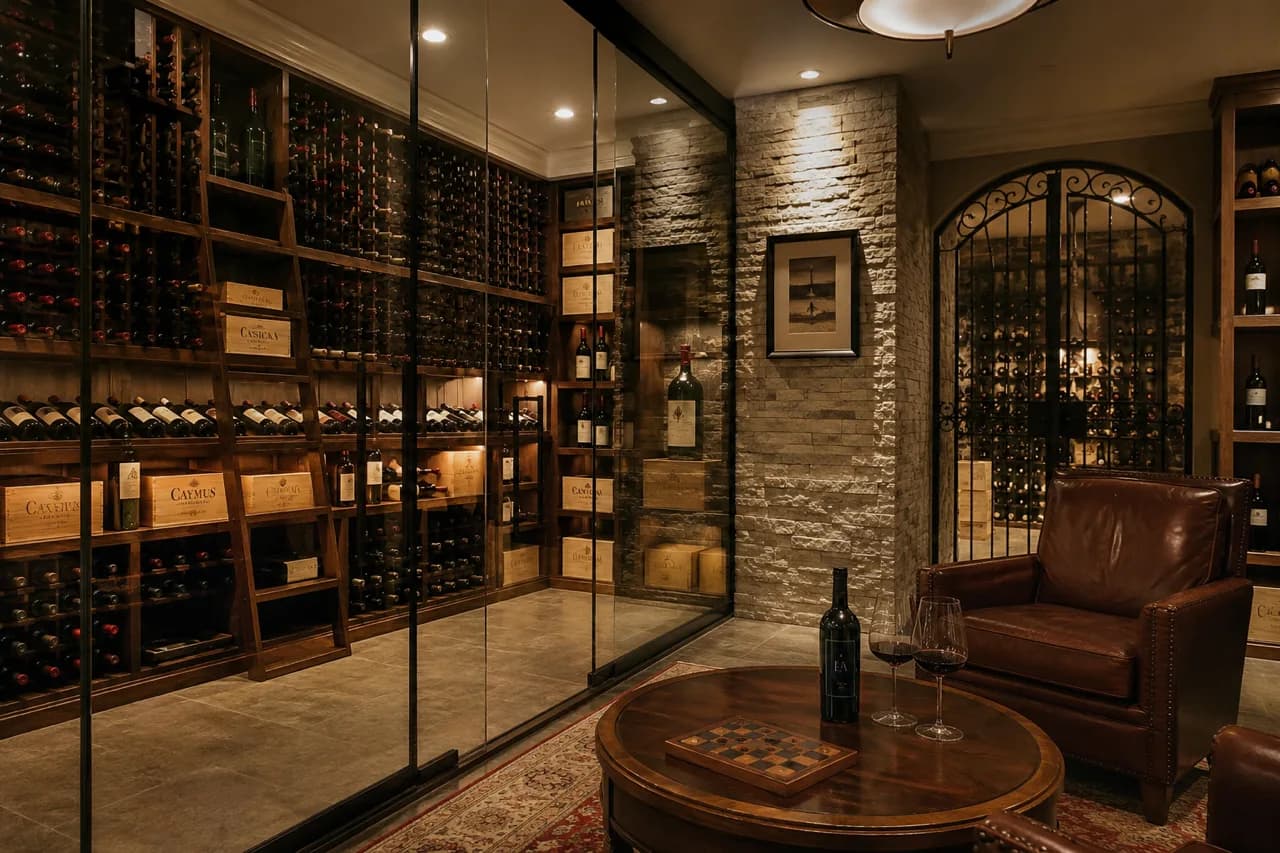
Operators invest heavily in making their facilities feel premium: the lighting, the lounge, the careful handling of every bottle. A generic or mismatched digital experience can undercut all of that. When the portal matches the look and feel of the building, the experience feels complete and deliberate.
Think of the portal as another room in your club, one members visit far more often than the lounge. It deserves the same care. Your colors, your tone and your standards should carry through from the front door to the phone screen without a jarring change in between.
The trade-offs to consider
Consumer cellar apps with their own brand do offer something in return, such as large communities of users, shared tasting notes and broad databases. For individual collectors, those features can be valuable, and many members will happily keep using those apps alongside your service.
But for your core relationship with members, which is storing, tracking and serving their collection, ownership matters more than community. The ideal is a platform built for storage operators that stays in the background, supporting your service without competing with your brand.
Data ownership and privacy
Branding is only part of the question. Ask who owns the member data and how it is used. With a white-label platform designed for operators, your members’ information and collection records should belong to you, be kept strictly separate from other businesses using the same platform and never be used to market anything to your members without your consent.
Be cautious of any arrangement where your members become the software company’s users in their own right, with their own accounts, marketing and relationships. That arrangement may suit the software company. It rarely suits the operator in the long run.
What to look for
When evaluating a portal, sign in as a member and look carefully at every screen. Is your name prominent? Are your colors used consistently? Do emails arrive under your name, and do replies reach your team? What appears on a phone’s home screen if a member saves it there? Is the platform’s own brand kept discreet?
Then consider the member experience itself. Can members easily see their collection, understand what is ready to drink and request bottles? Is it simple enough for less technical members? A beautifully branded portal that confuses people does more harm than good.
Finally, think about how the portal will look as your business grows. If you open a second location, or add a lounge and events programme, can the same branded portal carry all of it? A platform that already handles several sites under one name will save you a second difficult migration later.
The small details members notice
Members rarely think about branding consciously, but they notice inconsistencies. An email that arrives from an unfamiliar sender name. A sign-in page with a different logo from the one on the building. A statement that looks nothing like the portal. Each of these creates a moment of hesitation, and in a business built on trust, small hesitations add up.
Consistency also helps with security. Members who are used to seeing your name on every message are better placed to spot a fraudulent email pretending to be you. When the genuine messages come from an unexpected brand, it becomes harder for members to tell real communication from a scam.
Walk through the whole journey yourself as if you were a new member: the invitation email, the first sign-in, the collection screen, a pull request and a statement. Note every point where the experience stops feeling like your business, and fix those first.
Questions members may ask
Occasionally a member will ask what software you use. There is no need to hide it. Most members are simply curious, and an honest answer is always better than an evasive one. The point of white-label is not secrecy but focus: keeping the experience centred on your business rather than on a technology supplier.
Members may also ask whether their data is safe and who can see it. Be ready with a clear answer, and make sure your platform lets you give it truthfully: their information and collection records are kept separate from every other business on the platform, are never shared with other operators and are never used to market anything to them without permission. A member who asks is showing exactly the care you want from people who trust you with their wine, so welcome the question and answer it fully.
Your name, every time
As more of the member relationship moves onto phones, the question of whose name appears on the screen will only become more important. Operators who make sure it is theirs will build stronger, longer relationships. Those who let another brand sit between them and their members may find, over time, that those relationships are not as secure as they seemed.
Your members chose your business. The experience they carry in their pocket should remind them of that choice every time they open it.
Built for this. Best Cellar Club is white-label by design. Members see your club’s name and colors, emails arrive under your name with replies to your own inbox, and the portal saved to their home screen carries your name. Take the 2-minute tour →